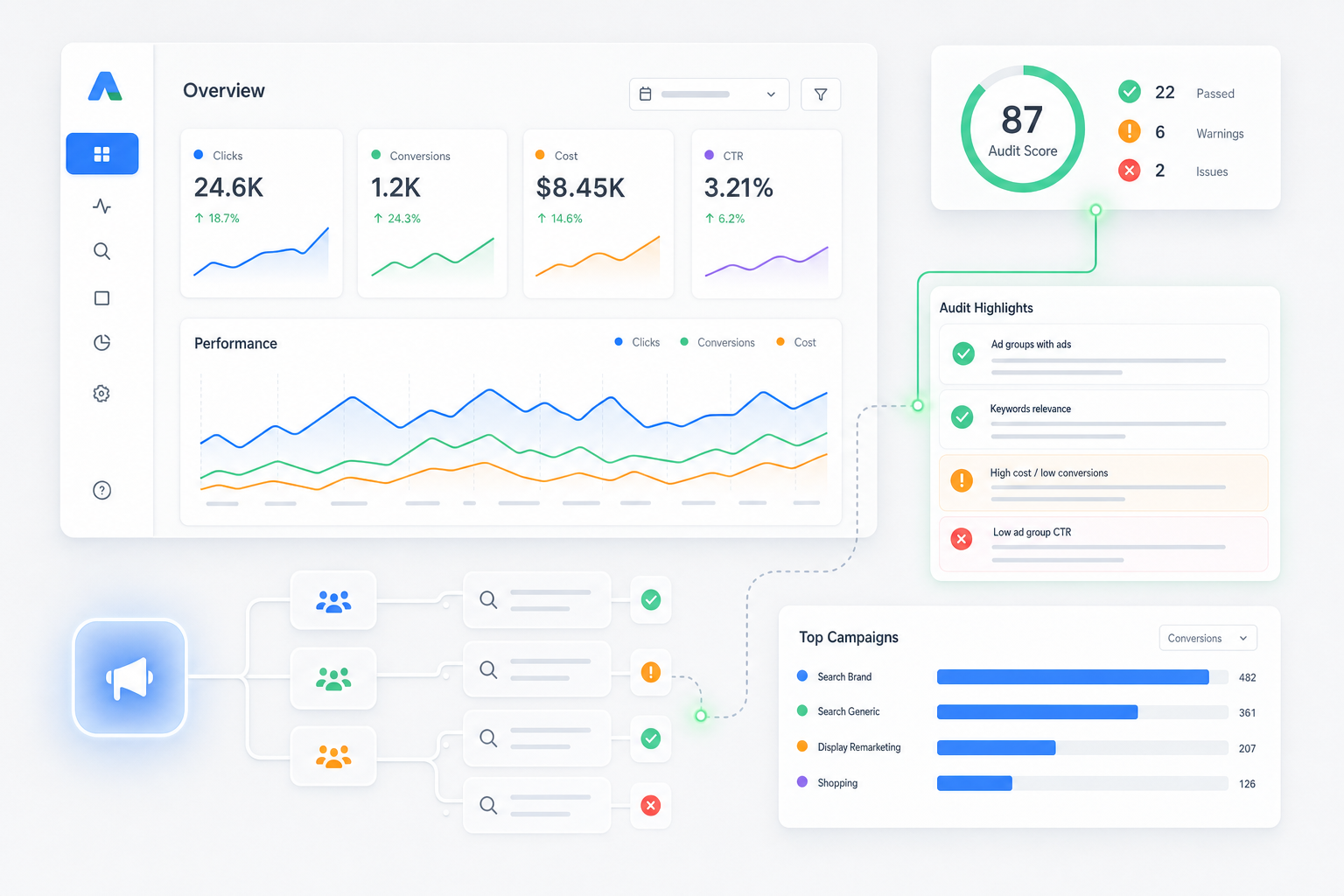

When you’re running Google Ads, the success of your campaigns often boils down to how well you planned them before a single ad goes live. It’s not just about bidding on keywords; it’s about understanding your market, your competition, and your audience. A solid strategy reduces wasted ad spend and improves your return on investment. If you’re serious about planning a PPC campaign that delivers real impact, you need the right tools in your arsenal. This list cuts through the noise, focusing on the five most impactful external tools for strategizing and setting up successful Google Ads PPC campaigns, from initial research to fine-tuning your approach.

Quick Reference List
- Google Keyword Planner
- SEMrush
- Google Ads Editor
- Ahrefs
- Google Trends
1. Google Keyword Planner

A foundational free tool within Google Ads for discovering new keywords and understanding search volume and cost estimates.
The undisputed starting point for any Google Ads PPC campaign, Google Keyword Planner (GKP) is essential for brainstorming keyword ideas and getting a sense of their potential performance. It helps you research keywords related to your business and get data on the average number of searches and bid estimates.
While it’s primarily a research tool, GKP’s insights are crucial for the initial keyword research phase. Understanding search trends, competition levels, and estimated costs per click allows you to build a more informed keyword strategy before launching campaigns, minimizing wasted ad spend.
Pros
- Free to use for Google Ads account holders
- Directly integrated with Google Ads
- Provides search volume and bid estimates
- Excellent for initial keyword discovery
Cons
- Data can be broad or estimated without active ad spend
- Less sophisticated for advanced competitor analysis
- Interface can be overwhelming for beginners
Key Features
- Keyword research and discovery
- Search volume trends
- Bid cost estimates
- Competition levels
Best For
Beginners and experienced advertisers for initial keyword research and budget planning.
Explore Google Keyword Planner
2. SEMrush

A comprehensive digital marketing suite offering in-depth keyword research, competitor analysis, and ad-gap identification for PPC planning.
SEMrush is a powerful all-in-one marketing toolkit that excels in PPC planning by providing deep insights into your competitors’ strategies. Its Advertising Research tools allow you to discover keywords your competitors are bidding on, see their ad copy, and identify profitable ad gaps you can exploit.
The tool’s ability to analyze paid search traffic, display advertising efforts, and keyword performance makes it invaluable for developing a robust PPC strategy. Beyond keyword research, it helps in understanding audience targeting and competitive bidding landscapes.
Pros
- Extensive competitor analysis features
- Robust keyword research capabilities
- Identifies keyword gaps and opportunities
- Comprehensive market insights
Cons
- Can be expensive, especially for smaller businesses
- Steeper learning curve due to the vast feature set
- Data might not be as real-time as Google’s own tools
Key Features
- Paid Search analysis
- Keyword Gap analysis
- Ad copy analysis
- Traffic analytics
Best For
Businesses and agencies looking for advanced competitive intelligence to inform their PPC strategy.
3. Google Ads Editor

A powerful desktop application for efficiently managing and planning large Google Ads accounts offline.
Google Ads Editor is a free application that allows advertisers to download their account, make bulk changes, and then upload them back to Google Ads. For planning, this means you can map out entire campaigns, ad groups, keywords, and ad copy offline without being connected to the internet.
This tool is invaluable for structuring campaigns, testing different ad variations, and managing large keyword lists before going live or during a campaign refresh. Its bulk editing capabilities save significant time and reduce errors when dealing with extensive PPC plans, especially for those managing large accounts.
Pros
- Free to use
- Enables offline campaign planning and management
- Excellent for bulk edits and mass changes
- Reduces errors for complex accounts
Cons
- Requires downloading and installing software
- Can be complex for beginners
- Syncing issues can occur if not managed carefully
Key Features
- Bulk editing of campaigns, ad groups, keywords, ads
- Offline campaign creation and modification
- Error checking and suggestions
- Import/export capabilities
Best For
Advertisers managing large accounts or those who prefer to plan and build campaigns in an offline, structured environment.
4. Ahrefs

A powerful SEO tool with a robust keyword explorer that also provides valuable PPC insights, particularly for keyword expansion and competitive analysis.
While primarily known for SEO, Ahrefs’ Keyword Explorer offers extensive data that directly benefits PPC campaign planning. It provides not only search volume but also keyword difficulty, click potential, and the ability to see which keywords drive paid traffic for competitors.
Its ‘Keyword Gap’ feature is particularly useful for PPC, showing you keywords your competitors rank for organically or via paid ads that you’re missing. This helps identify new keyword opportunities and refine your targeting strategy by understanding the broader search landscape.
Pros
- Excellent keyword expansion capabilities
- Strong competitive analysis for paid keywords
- Provides click potential and keyword difficulty
- Integrates SEO and PPC keyword data
Cons
- Primarily an SEO tool, PPC features are secondary
- Can be expensive
- Interface might feel more SEO-centric
Key Features
- Keyword Explorer
- Keyword Gap analysis
- Paid Search analysis
- Click potential
Best For
Marketers who want to leverage comprehensive keyword data and competitive insights for both SEO and PPC planning.
5. Google Trends

A free tool to analyze the popularity of search queries and uncover seasonal trends or emerging topics relevant to PPC planning.
Google Trends is an invaluable, free tool for understanding the ‘when’ and ‘where’ of search interest. It allows you to see how search interest for a particular keyword or topic has changed over time and in different regions. This is critical for PPC planning, especially for seasonal businesses or those launching new products.
By identifying trending topics, seasonal peaks, or regional search interest variations, you can strategically plan your PPC campaigns for maximum impact. This helps in allocating budgets more effectively, timing campaign launches, and tailoring ad copy or targeting to specific periods or locations.
Pros
- Free to use
- Identifies seasonal trends and search interest over time
- Helps in timing campaign launches and promotions
- Useful for understanding broad consumer interest
Cons
- Does not provide specific search volume numbers
- Data is relative, not absolute
- Requires interpretation to apply to PPC
Key Features
- Interest over time charts
- Regional interest maps
- Related queries and topics
- Comparison of search terms
Best For
Understanding search seasonality, identifying emerging trends, and timing PPC campaigns effectively.
Comparison Summary


| Tool Name | Key Feature | Best For | Price (Est.) |
|---|---|---|---|
| Google Keyword Planner | Keyword research and discovery | Beginners and experienced advertisers for initial keyword research and budget planning. | Free |
| SEMrush | Paid Search analysis | Businesses and agencies looking for advanced competitive intelligence to inform their PPC strategy. | $129.95/month |
| Google Ads Editor | Bulk editing of campaigns, ad groups, keywords, ads | Advertisers managing large accounts or those who prefer to plan and build campaigns in an offline, structured environment. | Free |
| Ahrefs | Keyword Explorer | Marketers who want to leverage comprehensive keyword data and competitive insights for both SEO and PPC planning. | $99/month |
| Google Trends | Interest over time charts | Understanding search seasonality, identifying emerging trends, and timing PPC campaigns effectively. | Free |
Conclusion
Choosing the right PPC planning tools is about building a robust strategy, not just throwing money at ads. From the foundational data of Google Keyword Planner to the competitive edge offered by SEMrush and Ahrefs, each tool on this list serves a distinct purpose in the planning phase. Google Ads Editor gives you control over large-scale implementation, while Google Trends ensures your campaigns are timely and relevant. By integrating these tools into your workflow, you’re not just running Google Ads; you’re orchestrating highly effective, data-driven campaigns designed for maximum impact and a solid return on your investment.